Category: Learning

Getting to Know LWB: The Interns, Part III

This year, Librarians Without Borders joined forces with San Jose State University (SJSU) in California to offer a service-based learning-model Virtual Internship program. Three students working towards Masters in Library and Information Science at San Jose State’s i-School are interning as Program and Communications Assistants with LWB’ers Melanie Sellar, Founder and Co-Executive Director; Erika Heesen, Membership Director; and Brandie Burrows, Guatemala Limitless Horizons Program Manager. We’ll be chatting, Q&A style, with each of the three students over the next few weeks, to get to know the LWB Interns.

Elise AversaElise Aversa, Guatemala Limitless Horizons Program Assistant

What is your current job title? I’m Assoc. Librarian at Loyola University Chicago and am the Library Director for the Rome Campus Information Commons…that sounds fancier than it is, we’re really small!

Tell us a little about your education and interests. I did my BA in Psych & Anthro-Soc. back in the Stone Age, but I was undecided about which graduate study to undertake. It seemed like a good idea to leave my cool apartment in San Francisco, sell my VW and move to Italy before accumulating student debt and obligation. I’m still here!

What led you to MLIS school? A kindred spirit did. Like most future librarians, I would never have thought that this would be my calling and just stumbled into it. The elementary school librarian where my boys were was so similar in outlook, sense of humor, politics and powers of observation…even though there is more than a generation between us, we could be twins separated at birth! I started volunteering at the library and fell in love with it. Now I’m at a university library and don’t get to do read-alouds, but the feeling is the same. I love doing random research and the students keep the work fresh and interesting.
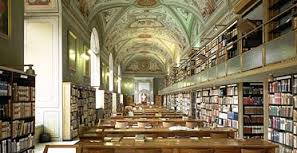
vatican libraryWhat do you hope to accomplish with your MLIS? What is your dream library job? I did my original library degree at the Vatican Library School, an amazing place for Humanities scholars. My MLIS from SJSU is updating me with the latest trends and service areas. My dream job is Information Resource Officer for the State Department working overseas to further library development in other countries. My long term dream is to build from this experience and work to create/better community libraries in developing countries once I can retire. I see myself in the Solomon Islands, dusting sand off the books!

What was it about LWB that drew you to the internship? When I caught sight of the name, the lights came on! It had never occurred to me that I could get a taste of my dream job while going to school. I’m really happy for the opportunity to learn and think more deeply about best practices in such a different setting. In my day to day work, I’m responsible for a high tech learning environment where everything is digital and literacy is a given at the college level. In Chajul, the challenges are very different but the spirit and the aims are THE SAME: getting our users excited about reading, learning and communicating that knowledge back to the community for the greater good.

Name three things that you will take away from your experience with LWB and the virtual internship program?

  1. Libraries rock! What an amazing thing a community library is. Libraries are one of the few things that people have trust in around the world. That is both a privilege and an obligation.
  2. Librarians have much more in common than they have differences. No matter who you serve and where you are, librarians are always trying to think ahead and do an even better job. I haven’t had the pleasure of meeting them [the Guatemala Limitless Horizons group] in person, but reading through their manual, looking at their goals and watching them rock the house at story time (thank you Brandie and YouTube) tells me that though we don’t speak the same language or have the same histories we have SO MUCH in common.
  3. They are doing all the right things at Saber sin Limites. These librarians are doing a great job of building up their library in a sustainable way. The best practices are in place and they have scaffolded partnerships, goals and projects that can continue to grow realistically. No library should be an island and we all gain much from sharing experiences and expertise; LWB is a good fit for Saber sin Limites.

What are you reading right now? Do you have a favorite book? I’m reading Stephen Millett’s Managing the Future. I really don’t have a favorite, though I could generate a very long and eclectic list of books I have loved!

FacebookTwitterShare...

Getting to Know LWB: The Interns, Part II

This year, Librarians Without Borders joined forces with San Jose State University (SJSU) in California to offer a service-based learning-model Virtual Internship program. Three students working towards Masters in Library and Information Science at San Jose State’s i-School are interning as Program and Communications Assistants with LWB’ers Melanie Sellar, Founder and Co-Executive Director; Erika Heesen, Membership Director; and Brandie Burrows, Guatemala Limitless Horizons Program Manager. We’ll be chatting, Q&A style, with each of the three students over the next few weeks, to get to know the LWB Interns.

Smiley Face HeadshotAlison Peters, Communications Assistant Intern

What is your current job(s) title? I’m currently a Lead Project Coordinator with HR Options, and a freelance writer for Book Riot.

Tell us a little about your education background and your interests. I love school, and I love reading and writing. I received my BA in English from University of California, Berkeley, and then hopped right into the full time job stuff with HR Options. At some point I realized that I wanted to continue my writing studies, but also didn’t want to move too far away, so I found (and was lucky to be accepted to!) Mills College, in Oakland, California, where I completed an MFA in Creative Writing.

What about the LWB organization drew you to the organization? How has your experience been thus far? LWB had me at their title, because my initial professional dream was to be a doctor with Doctors Without Borders. (Dream deferred by Chemistry 1 in college!) When I checked out their website, the group just got more and more interesting. I’m so excited to be interning with a nonprofit group, created by librarians, with the goal of educating and providing library services to communities who otherwise would be sorely lacking. I love that LWB isn’t afraid to go into vastly different communities, in far away countries, with different cultures and languages and ideas about libraries and books, and do the research to help develop programs that will be benefit to the people in that community.

So far, the internship experience has been amazing. LWB is organized, professional, interested in what we’re doing as students and how they can add to our skills, but also using the competencies we bring to the internship. It makes for a beautiful relationship.

At what point in your life did you realize you wanted to pursue your MLIS? I went to a professional job counseling service a few years ago, trying to determine where I wanted to take my career. The counselor was an ex-librarian, which was all I needed to see the signs: I started San Jose State’s MLIS (now i-School) just a semester later! I love the combination of skills I now have: writing, researching, reviewing, with a good dose of customer service, problem solving and troubleshooting for good measure. Virtual school and internships, and writing for Book Riot as part of a virtual team have shown me how many opportunities there are to create the type of work and work/life balance that I’m looking for.

What to you hope to accomplish with your MLIS? What is your dream library job? I initially went into the MLIS to be a YA or youth librarian, as my best library memories are from my younger days, and I wanted to help give that back to kids. However, the more classes I take the more I realize I like the virtual/online/information aspect of being a librarian - which can actually mean not being a traditional librarian at all. I love that I’m coming across librarians whose focus is social media, outreach, etc. So at this point my dream job would be to work in a communications/online search capacity for a library or similar group, virtually, so that I can continue to write and finish up the degree in the next year.

Name three things you will take away from your experience with LWB and the virtual internship program.

  1. Always ask for nonprofit pricing! When doing research for LWB, it wasn’t in my usual line of questions to ask about special nonprofit pricing or program options. It’s great to know that a lot of companies have them, if you just ask nicely. And to think from the other side of the corporate world, which isn’t something I have a lot of experience with.
  2. A revived passion for social media tools. I was pretty stagnant in my personal social media life, just using Facebook, with passive LinkedIn and Pinterest accounts. Doing the social media research for LWB has given me a huge appreciation for how you can use the sites - including Twitter - to not just place targeted ads, but to really give your readers interesting articles, pictures, facts, blurbs. Essentially, whatever I might find interesting about LWB, chances are our reader population will too.
  3. Virtual work and tools for performing it are better than ever. I’m exploring the many facets of Google, from email, hang-outs, docs with sharing and notification permissions, and calendars. I’m proficient in Skyping and using WebEx, in addition to the Canvas/Blackboard/Collaborate with SLIS, and FaceTime on my iPhone.

What is your favorite book and why? I’m going back to an old favorite, Tar Baby, by Toni Morrison. I love this book for several reasons: one, it brought me close to a very good friend in college, when we both picked this book for our senior thesis project. And it’s just a beautiful book, telling a love story based on a fable, modernized, and still relevant. A beautiful young woman with a troubled family past falls in love with a boy from (essentially) the wrong side of the tracks, and has to chose if she’ll follow her heart or her family’s wishes. But much deeper than that, because - Toni Morrison.

Brotherton Library, University of Leeds, Leeds, UK

Which leads me to my favorite library, which is actually a close tie between two: the San Rafael branch library in Pasadena, California, where I grew up and where I discovered the joys of books; and the Brotherton Library at the University of Leeds Leeds, UK. At San Rafael I haunted the aisles for LM Montgomery, Louisa May Alcott and the sisters Bronte - stories about family and chaste romance were my thing. But at Leeds, studying abroad in college, away from all of my family (and for that matter, my books) I would creep into the domed-ceiling library and find comfort in the African American fiction section, where I became really close with Alice Walker, June Jordan, Paule Marshall - women who spoke to me, comforted me and reminded me of home. Both libraries still hold special places in my heart.

FacebookTwitterShare...

Getting to Know LWB: The Interns

This year, Librarians Without Borders joined forces with San Jose State University (SJSU) in California to offer a service-based learning-model Virtual Internship program. Three students working towards Masters in Library and Information Science at San Jose State’s i-School are interning as Program and Communications Assistants with LWB’ers Melanie Sellar, Founder and Co-Executive Director; Erika Heesen, Membership Director; and Brandie Burrows, Guatemala Limitless Horizons Program Manager. Using all of the virtual tools at their disposal - Skype, WebEx, Google, Only Office, good old phone calls - the interns are hard at work on projects including providing research assistance in support of the new emerging program with Limitless Horizons Ixil in Guatemala, and developing a communications/social media strategy for the group. We’ll be chatting, Q&A style, with each of the three students over the next few weeks, to get to know the LWB Interns.

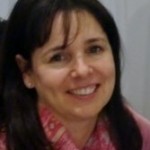
Maryanne Daly-DoranMaryanne Daly-Doran, Communications Assistant Intern.

What was it about LWB that drew you to the internship? In my position at the Hartford Public Library, I developed a special interest in the many pre-literate and non-literate (individuals who either speak a language that has no written form, or are illiterate in their native language) individuals who struggle with the literacy component of the naturalization exam. Working with so many individuals who come from countries with little or no library culture led me to evaluate how I had taken the free public libraries in the U.S. for granted. I often times wonder what my life would be like if there were no libraries? Imparting knowledge to an individual is so empowering, I knew when I heard about LWB that I wanted to be a part of it and its mission. I loved the idea of LWB’s service learning model and its goal of narrowing the information divide by supporting librarians in developing countries. To learn about international librarianship has been just an exhilarating experience.

Is this your first internship? How do you find the virtual part? This is the first internship I have participated in at SJSU. I have found the virtual aspect to be very flexible and instructional as well. I love the regular check-ins with Melanie Sellar and Erika Heesen and their support of our learning experience as well. It is so amazing that there are so many ways to communicate and if one doesn’t work, there are always alternatives. I have learned much about collaboration and my technological skills grow by the day.

What was your experience with social media prior to this internship? How has working with LWB changed your thoughts or approach to social media? Admittedly, my experience with social media prior to this internship was limited to my personal Facebook account and the development of a few Facebook pages for some local school based organizations. Working with LWB has made me realize how important it is to understand how the use of various social media tools bring value to the non-profit organization. Social media platforms promote non-profit organization’s information and services, as well as bring people of similar interests together to network. In developing Best Practice recommendations, I was invited to be an analyst and was able to compare and contrast similar pages as well as to watch the impact of different posts and methods. I feel I gained invaluable experience first hand and have a much better understanding of strategy.

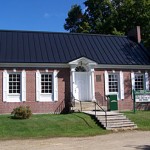
Weld Public LibraryWhat’s your favorite library, and why? What was your experience with this particular book home? My favorite library would have to be Weld Library in Weld, Maine (Population 340). It was at this library in this tiny town in the Appalachian mountains that I volunteered at the age of 12 with card cataloguing, thus initiating me into the world of libraries! It was in the stacks at this library that I became acquainted with the likes of Pearl Buck, Mark Twain, Tennyson and Poe. The fact that I was able to lose myself in the wondrous world of reading in this tiny, impoverished factory town during my vulnerable years makes this my favorite library, hands down.

What led you to San Jose State’s Library & Information Science program? Where do you see yourself, post-degree? As a child, I initially struggled to learn to read, I remember going into libraries with my mom and seeing the stacks of books that I wasn’t yet able to read. Fortunately, I had two parents who were library proponents and they instilled a love of books and libraries from a young age. When I finally mastered the skill of reading, I read everything I could find and have continued doing so throughout my life. I never take reading for granted and when I work with adults who are illiterate, I often wonder how my life would be if I was not able to read. It’s such a powerful question and I know I take the abundance of libraries in our country for granted at times. I initially entered Law School with the goal of working with underserved and vulnerable populations. While there, I always preferred time in the library over the class and never forgot this. When I was hired many years later at the Hartford Public Library as the program coordinator for the Citizenship Program, I realized how libraries affect change in the communities served. I was encouraged to pursue my MLIS and the online learning environment made it possible for me to realize my dream. My ideal job would be to work in literacy programming in underserved populations either here or somewhere else in the world.

What are you reading right now? I am reading two books (of course!). I am listening to The Garden of Burning Sand by Corban Addison and reading Mambo in Chinatown by Jean Kwok. I always have to be listening to a book on tape during my commute to work!

FacebookTwitterShare...

Reflections from LWB North American Speaking Tour with Guatemalan Partner Jorge Chojolán

During the LWB North American Speaking Tour with our Guatemalan Partner Jorge Chojolán, LWB student committee members were asked to reflect on their experience attending the workshops and public events during the tour. This post comes to us from Emily, a member of the LWB University of Toronto Student Committee and a student in the Faculty of Information Studies at the University of Toronto.

I attended two of Jorge Chojolan’s workshops about Miguel Angel Asturias Academy. His story and the history of the academy are truly inspiring. Jorge has created an amazing school with such a limited amount of resources. It was really great to see how Librarians Without Borders helps the school, and how enthusiastic the kids are about their library. Jorge’s presentation made me realize how much the work and fundraising that we do means to communities in need of library resources.


Speaking Tour Workshop (Toronto): Challenges of preservation of indigenous languages and culture in Guatemala - Faculty of Information, University of Toronto


FacebookTwitterShare...

Read to someone special on International Literacy Day!

In celebration of International Literacy Day, Librarians Without Borders compiled a list of Children’s titles about books and libraries, emphasizing the importance of books and libraries for children’s imagination and growth. Celebrate International Literacy Day by reading to someone special!

Enjoy!

Children’s titles about books and libraries

Chinese

  • Wu wei xiong he xiao hua By: Mary Murphy

English

  • Richard Wright and the library card By: William Miller
  • Librarian on the roof! : a true story By: M.G King
  • D.W.’s library card By: Marc Brown
  • Lola at the library By: Anna McQuinn
  • When the library lights go out By: Megan McDonald
  • Maisy goes to the library By: Lucy Cousins
  • Rachel’s library By: Richard Ungar
  • The House of Wisdom By: Florence Parry Heide
  • Max goes to the library By: Adria F. Klein
  • Tiny goes to the library By: Cari Meister
  • Carlo and the really nice librarian By: Jessica Spanyol,
  • I.Q. goes to the library By: Mary Ann Fraser
  • Book! book! book! By: Deborah Bruss
  • Beverly Billingsly borrows a book By: Alexande Stadler
  • But excuse me that is my book By: Lauren Child
  • Amelia Bedelia, bookworm By: Herman Parish
  • ABC letters in the library By: Bonnie Farmer
  • The boy who was raised by librarians By: Carla D. Morris
  • Library lion By: Michelle Knudsen

French

  • Alcatraz contre les ossements du scribe By: Brandon Sanderson
  • Alcatraz versus the Scrivener’s Bones By: Brandon Sanderson
  • La bibliothèque fantôme By: David Melling
  • Que lit Galette à la bibliothèque? By: Lina Rousseau

Portugese

  • Milagre na biblioteca : o livro que não gostava de computadores By: Humberta Maria Araujo

Spanish

  • Richard Wright y el carné de biblioteca By: William Miller


FacebookTwitterShare...

Guatemala and the Knowledge Management Problem

— Amy McLay Paterson

This past semester I T.A.’ed for an undergraduate class in knowledge management (KM)—a subject that I knew very little about then, and even now, I’d hardly claim to be an expert. As recently as last week, I had to mark 21 essay questions on whether or not knowledge management is dead, and (mainly due to the fact that they were taking the class in the first place) all but one of my intrepid undergrads argued that it was not.

Mostly, I’m inclined to agree with them. In Canada, as well as I’m sure many other countries in the developed world, knowledge management is (rhetorically speaking) key. Codifying knowledge creates progress; it means never having to start from scratch. The prioritization of explicit over tacit knowledge in the form of written records, plans, policies, etc. is probably a large factor in how the highly developed powers got to be developed in the first place. Canadian (perhaps I should say Western) culture has progressed beyond memory; external records and information now surpasses the collective information in the human brain, and what tacit knowledge remains may very soon be recorded, if not in policy, in Wikipedia pages and YouTube instructional videos.

So upon arriving in Guatemala, with student KM papers still dancing in my head, my culture shock was in experiencing the complete lack of knowledge management as I know it. Here is a world where tacit knowledge still reigns—where the simplest things, such as procuring a free inner tube at the water park, or finagling transportation, are mind-boggling to outsiders who don’t know the code (or the language, for that matter).

So perhaps the most relevant question as far as Guatemala is concerned is not, Is Knowledge Management Dead? but, Is Knowledge Management Relevant? Though I stand by my earlier statement that KM is integral to progress, historically there have always been certain civilizations more interested than others in this particular goal. Tacit knowledge may be more transitory than explicit, but it’s also buoyant, playful, malleable, and mysterious. And yes, I think a lot of this kinetic cultural energy can’t help but be lost when communication happens primarily through written record rather than observation and experience.

Part of the Asturias mission statement involves moulding transformative citizens, which is sort of—but not quite—like progress. Education, and particularly the inclusive, accessible brand of education that Asturias is committed to, is very necessary for transformation, but organization, policy, and KM in general? I’m not entirely convinced. Transformation evolves from the effort of individuals making personal choices to change their lives for the better; progress happens on a larger scale, and for many societies, requires the collateral sacrifice of other facets of cultural identity.

I live in a world where information is organized and searchable, so fortunately for me, my lack of social skills and general cluelessness don’t serve as much of a hindrance to negotiating my way around life in general. However, it would certainly be more interesting, if not more rewarding, if maybe I couldn’t find all my answers written on the Internet somewhere.

Even still, I am a librarian, and the sad truth is that the Guatemalan people are forced to live in my world much more than I will ever live in theirs. Globalization has, if not forced, definitely facilitated the externalization of knowledge, and “success” is partially dependent on how well an individual or a nation can navigate information not only of their own culture but of the wider world. Basically, the information is there, so obviously there are many advantages accrued by those who can access it.

Is there an alternative? I don’t know. The Internet has solidified an already-unignorable Western presence in developing cultures, and I don’t know if there’s a way to, if not turn it off, at least counterbalance the tides. Living in a global village may mean succumbing to the overarching status quos; it’s learning, but it’s not without giving up. By bringing organization, knowledge management, and other information literacy techniques to Asturias, we are, without a doubt, providing these children with valuable, useful, maybe even necessary skills; if we can’t let them out of our world, the least we can do is provide a road map. We are helping, but I can’t help but wonder about any unintended consequences of our efforts. This is far from a deal-breaker, but it is a problem, and it’s something we need to keep in mind. If there is no third way, then a middle ground must be our top priority.

FacebookTwitterShare...

Asturias Academy Summer Internship Program

Since Sept 2009 Librarians Without Borders and the Miguel Angel Asturias Academy in Que­tzal­te­nango, Guatemala have been working together to promote literacy and learning. The focus of our partnership is on the development and operation of a library at the Asturias Academy.

The Academy has announced its 2011 Summer Internship Program, a two week for college-aged students (and beyond!) who are interested in an intern abroad experience in the fields of education and/or non-profit management.

Read the application in is entirety, and here’s a snippet:

Participants will have the opportunity to learn or deepen their knowledge of Spanish, get a hands-on internship in an internationally recognized school, experience Guatemalan culture through a homestay and other cultural events/visits, and help our 300+ low-income students achieve a world-class education.

Wondering what the experience might look like? Check out photos from Librarians Without Borders’ McGill students trip there in 2010. Planning for our 2011 trip is well underway.

FacebookTwitterShare...

LWB Presents at the Ontario Library Association Conference

Toronto, ON, Canada

Two Librarians Without Borders volunteers will be presenting at the Ontario Library Association SuperConference, the largest annual gathering of librarians in Canada, this February 3rd in Toronto. Join Jessica Luet and Courtney Lundrigan from 1:00-1:45 pm at the Poster Expo.

You can also catch them at the University of Western Ontario’s Faculty of Information and Media Studies‘ alumni event at Joe Badali’s on February 3rd from 5:30-7:30 pm. If you’re a FIMS alumni, drop by to meet them, view the poster, hear about this project, and learn more about LWB.

From the Ground Up:

A Collaborative Library Experience in Costa Rica

Courtney Lundrigan and Jessica Luet

In September 2009, Librarians Without Borders (LWB) at the University of Western Ontario (UWO) undertook a project to build an elementary school library in the village of El Humo, Costa Rica. After nine months of fundraising and collection development, a team of ten volunteers went to physically build and set up the library. Participants experienced cultural life and gave the village its first library. The project inspired a continuing collaboration between LWB and the partner association in Costa Rica. Learn how we are supporting information literacy and community development while celebrating international, school, and children’s librarianship.

FacebookTwitterShare...

Librarians Without Borders 2010 Annual Report

The 2010 Annual Report for Librarians Without Borders is now available. Here is an excerpt from the Board of Directors’ message:

“This has been a very defining year for Librarians Without Borders. At our Annual General Meeting last December, we reported on the very beginning stages of a fundamental re-evaluation and strategic re- focusing effort. Now, twelve months later, we can report that we have progressed from taking stock of our strengths and weaknesses, to identification of core considerations to guide our direction going forward, to synthesis of a strategic road map that meets our mission, and finally on to practical execution of these directives. We would like to briefly describe some of the thinking behind these ideas…”

View/download: LWB 2010 Annual Report

FacebookTwitterShare...

Speaker Series: Running a Library in Tanzania

Submitted by Jessica Veldman

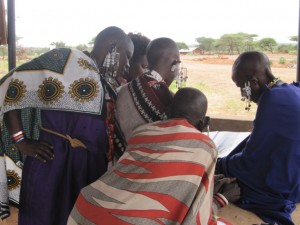
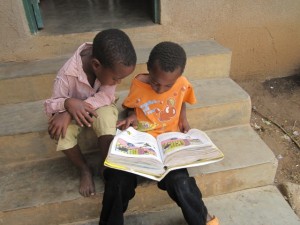
On October 6, Librarians Without Borders gathered together students and faculty at the University of Western Ontario to hear Joanna Kerr speak about her experience volunteering at a community library in Tanzania. Joanna spoke of the unique challenges and opportunities that faced library staff, as well as the day to day activities of the library. What began as a trip to volunteer for just five weeks quickly become an emotional and rewarding experience as she worked closely with the children of the community in an effort to help them read and learn over two trips.

Massai Women Reading

DVD Friday

Joanna’s talk was an insight into international librarianship that many of us had not experienced. It was an inspirational experience and forced us to rethink the basics of library service and how our preconceptions can stand in the way of our patrons.

Children Reading

Thank you to Joanna for sharing with us the photos published in this post and to the LWB volunteers at the University of Western Ontario for hosting this successful educational event for the community.

FacebookTwitterShare...

WordPress Themes